
Monday, September 26

Cantaloupe-related outbreak of illness linked to 13 deaths


Jensen Farms is recalling Rocky Ford whole cantaloupes that were shipped between July 29 and September 10.An outbreak of illness linked to consumption of tainted cantaloupes has been linked to 13 deaths and 72 illnesses in 18 states, a federal disease agency reported Wednesday.
The outbreak -- blamed on the bacteria Listeria monocytogenes -- was first reported September 12, when the Centers for Disease Control and Prevention said 15 people in four states had been infected. The illnesses were traced to consumption of Rocky Ford cantaloupes grown at Jensen Farms' fields in Granada, Colorado.
The deaths reported as of Tuesday morning occurred in Colorado (two), Kansas (one), Maryland (one), Missouri (one), Nebraska (one), New Mexico (four), Oklahoma (one), and Texas (two).
The illnesses occurred in those states as well as in California, Florida, Illinois, Indiana, Montana, North Dakota, Virginia, West Virginia, Wisconsin and Wyoming.
Listeriosis primarily affects older adults, pregnant women, newborns and adults with weakened immune systems, according to the CDC website.
Jensen Farms, which is based in Holly, Colorado, is voluntarily recalling Rocky Ford whole cantaloupes that were shipped between July 29 and September 10 and distributed to Illinois, Wyoming, Tennessee, Utah, Texas, Colorado, Minnesota, Kansas, New Mexico, North Carolina, Missouri, Nebraska, Oklahoma, Arizona, New Jersey, New York and Pennsylvania.
The cantaloupes bear a green-and-white sticker that reads: Product of USA- Frontera Produce-Colorado Fresh-Rocky Ford-Cantaloupe or a gray, yellow, and green sticker that says: Jensen Farms-Sweet Rocky Fords.
Unlabeled whole cantaloupe should be taken to the retailer for sourcing information, the FDA said.
"Jensen Farms continues to stay committed to the highest levels of food safety and maintains many third-party safety audits, as we have for many years," said Ryan Jensen, a partner at Jensen Farms. "We continually look for ways to enhance our protocol."

Wednesday, September 21

India orders poultry culling after bird flu outbreak


Authorities ordered immediate culling of poultry in eastern India after samples tested positive for bird flu.
The disease was reported in two villages of West Bengal state's Nadia district, the Indian agriculture ministry said Tuesday.
Laboratory tests confirmed the infections as the H5 strain of avian influenza, according to officials.
"It has been decided to immediately commence the culling of birds and destruction of eggs and feed material to control further spread of the disease," the ministry said in a statement Tuesday.
Culling, it added, would be carried out within a 3-kilometer (nearly 2-mile) radius of the infected zone.
In addition, surveillance will be mounted up to a 10-kilometers (6-mile) radius, the ministry said.
Federal authorities recommended banning the transport of poultry and products from infected areas, among other measures.
International organizations, the ministry said, will also be notified about the outbreak.

Friday, September 16

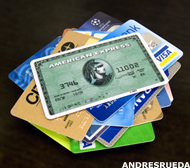
5 Places Never to Use Your Debit Card

No doubt about it, debit card usage is a big part of the new normal on Main Street these days as consumers try to manage credit card debt.
According to the TSYS & Mercator Advisory Group Debit Survey 2011, debit is now  the preferred payment type in most point-of-sale locations, beating cash, credit cards and checks.
But that doesn’t mean you should use debit cards all the time. In fact, there are some places and times that using a debit card is actually a lousy proposition.
For example, using a debit card online can work against you. If you have a problem with the purchase or your debit card number is stolen, it’s a huge hassle to get the money restored to your account and making your card number safe and secure again. In the online world, credit cards are usually a better bet.
Here are some other instances where debit card usage is a bad idea:
Rental or security deposits. If you have to put money down to rent a car or heavy duty home improvement equipment, try not to use a debit card. Why? Because the business will actually take the money out of your account in the form of a security deposit. You’ll get the cash back when you return the car or equipment. But with a credit card, the money is just “frozen” but not actually charged and you won’t ever notice it’s gone.
Restaurants and bars. There are way too many prying eyes around a dining establishment to trust using your debit card. Apart from the risk of having your card stolen, restaurants are one of those rare places where someone actually walks away with your card and you don’t see them for a few minutes. Much better to use cash when dining out.
Regular payments. Businesses love to get their sticky little fingers on your debit card number so they can extract dues straight from your bank account on a regular basis. Whether it’s a gym or your insurance company, you’re better off using a credit card. That’s because if there’s a dispute, the business won’t take the cash right out of your checking account if they don’t have your debit card number.
Wi-Fi hot spots. Never use your debit card for an online purchase while at a coffee shop or other business that offers free Wi-Fi access. Many of those businesses have unsecured wireless connections, so it’s much easier for hackers and scammers to log on and steal your data.
Any retail outlet where you choose the “credit” option. Debit cards allow you to choose between a debit (having cash taken straight out of your account) and a credit transaction (where the money will be taken out but it could be a few days later). For one, credit purchases cost the retailer more cash in swipe fees, so you could be hurting a small business owner. But the real problem is the delay when choosing credit – you may forget the purchase and not account for the money. That can lead to an overdraft situation and the onerous fees that go with them.
Debit cards are great financial tools, and it’s easier carrying a card that a wad of cash. But debit cards shouldn’t be used all the time – and the situations listed above should be at the top of your list of “no debit” zones in the future.